Table of contents
Forgotten chargers and flimsy shoes are classic travel regrets, but the real damage is often quieter, a missed connection, an overbooked train, a soggy day with no backup plan. As summer crowds thicken across Europe and airlines tighten carry-on rules, experienced travelers are rethinking what “prepared” actually means, prioritizing compact systems over bulky gear. The best toolkit is not a single gadget, it is a set of choices that keeps a trip moving when timing, weather, and logistics shift.
The checklist that saves the first day
Ask any seasoned traveler what breaks a trip first, and you will rarely hear “lack of fun.” It is friction, the kind that hits in the opening hours, when you are tired, offline, and trying to decode an unfamiliar transit map. The most reliable travel toolkit starts well before the airport, with a checklist built around failure points, because the first day carries outsized stakes. A late arrival plus a closed reception window, a delayed bag plus a non-refundable ticket, or a phone that drops to 2% at passport control can turn a simple journey into a scramble.
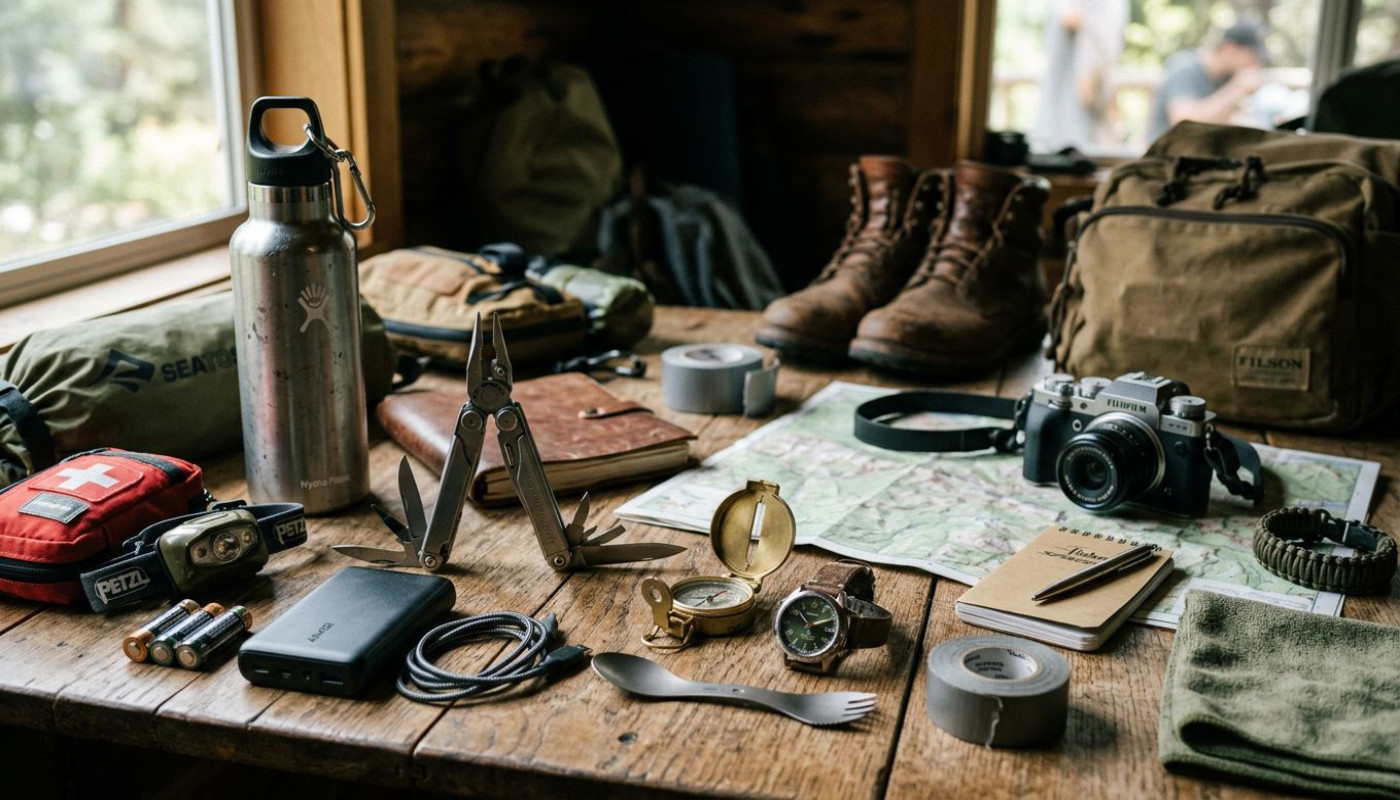
Practically, veterans separate “mission-critical” from “nice-to-have,” and they pack accordingly. In the critical layer sit documents and redundancies: passport, a second photo ID, printed confirmations, and offline copies of key QR codes. Battery management is treated like currency, with a high-capacity power bank that meets airline limits, a short cable that will not snag in tight seats, and one fast charger that works internationally. Even the most digital travelers keep one physical card separate from their wallet, and a small amount of local cash for taxis, tips, or the café that still runs on cash-only habits.
Planning is not about locking every hour, it is about removing obvious choke points. Experienced explorers pre-book the first night, confirm late check-in policies, and screenshot the route from airport to accommodation while Wi‑Fi is still easy. They also build in a “soft landing” routine: a simple meal plan, a short walk, and one low-effort activity that can be done in any weather. In practice, that is often a museum with timed entry, a covered market, or a guided tasting, the kind of anchor that makes a city feel navigable even if the rest of the day unravels.
Data supports the idea that small frictions add up. Airlines, airports, and travel insurers regularly point to common triggers for claims and complaints: delays, missed connections, and lost baggage. Even without a crisis, research by the International Air Transport Association has shown that passenger volumes remain high, and tight turnaround times can amplify the impact of small disruptions. A checklist does not guarantee a smooth trip, but it reduces the number of things that can go wrong at once, and that is the real advantage in an era of crowded terminals and shifting schedules.
Why veterans pack “redundancy,” not stuff
More gear does not mean more resilience. The difference between a heavy bag and a smart kit is that the smart kit is built on redundancy, small backups that prevent a single failure from cascading. That might sound technical, yet it is deeply practical, and it can be applied to almost every category: power, connectivity, weather protection, health, and money.
Start with power and data, because modern travel is inseparable from the phone. Seasoned travelers carry one compact adapter that covers multiple plug types, and they keep one spare cable, because cables fail far more often than phones. For connectivity, the toolkit increasingly includes an eSIM or a local SIM plan as a fallback, especially when public Wi‑Fi is unreliable. Offline maps, downloaded playlists, and saved addresses in a notes app remain underrated; they turn a dead zone into a manageable detour, and they spare you the stress of searching for a signal in the rain.
Then comes weather, the quiet saboteur. Instead of packing “for every scenario,” veterans pack a system: a light waterproof shell, shoes that handle wet pavement, and one layer that adds warmth without bulk. This is less about fashion and more about stamina, because comfort extends the day, and discomfort shortens it. A small packable tote or daypack also counts as redundancy, it helps with groceries, museum cloakroom rules, and the sudden need to carry a jacket you no longer want to wear.
Health and small repairs matter more than people admit. A minimalist kit can cover most needs: blister plasters, pain relief, antiseptic wipes, and any prescription medication in original packaging. Add a tiny sewing kit or a few safety pins, and you can rescue a torn strap or a missing button without losing time hunting for a shop. It is the same logic that guides travelers who keep a spare pair of glasses, or at least an updated prescription, because replacing essentials abroad can be surprisingly slow.
Finally, money redundancy is less glamorous but crucial. A second card stored separately, a note of emergency phone numbers, and awareness of daily card limits can prevent a frozen account from ruining a trip. Many banks still flag foreign transactions, and fraud systems do not always behave predictably when you switch countries in a week. Redundancy is not paranoia, it is simply a way to keep moving when the “one thing” you relied on stops working.
Experiences are part of the toolkit
Here is the overlooked truth: what you choose to do can be as protective as what you pack. Seasoned travelers treat experiences as part of their toolkit, because the right activity can reset a day, introduce a city quickly, and absorb variables like rain, crowds, or jet lag. After all, a well-timed plan is not just entertainment, it is a buffer against the chaos that tends to arrive unannounced.
Guided experiences, in particular, function like a shortcut. They compress logistics, local knowledge, and cultural context into a few hours, and they reduce decision fatigue when you are new to a place. A good guide will often flag what is open late, which neighborhoods are best for a first evening, and how to avoid the most punishing queues. That matters in destinations where visitor numbers spike seasonally, and where the most popular venues can sell out days ahead. Booking a timed entry or a structured activity can also protect your budget, because it limits impulse spending that comes from wandering hungry and unplanned.
In cities with strong food and drink cultures, tastings are a particularly effective “tool,” because they combine shelter, storytelling, and a clear schedule. In Scotland, for example, whisky tourism has become a serious economic force, with distilleries, bars, and curated events drawing both enthusiasts and curious newcomers. For travelers who want something that feels local without requiring deep preparation, choosing an established operator, with clear meeting points, duration, and inclusion lists, reduces uncertainty. Options like https://www.edinburgh-spirit.com/ illustrate how a structured tasting can fit into a travel toolkit, especially on a first night or a weather-proof afternoon, when you want an experience that is rich but not logistically demanding.
The key is not to overbook. Veterans leave space for serendipity, yet they anchor each day with one “high-certainty” item. That might be a museum slot, a ferry ticket, or a walking tour that ends near dinner options. The payoff is psychological as much as practical: when at least one plan is locked, the rest of the day feels flexible rather than fragile. This approach also pairs well with modern travel realities, where popular restaurants and flagship attractions can require reservations, and where last-minute availability may be thin at peak times.
What experienced travelers still get wrong
Confidence can be a liability. The more you travel, the easier it is to assume you can improvise everything, and that is exactly when small oversights sneak in, the missed museum closure day, the train strike, the sudden need for travel insurance paperwork you did not save. Even seasoned explorers fall into patterns that made sense five years ago, but no longer match the way travel works today.
One common mistake is underestimating time, not just for airports, but for cities. Urban centers have become more crowded, and major stations can be bottlenecks at commuter peaks. Add bag-drop rules, timed entries, and restaurants that require bookings, and “we’ll figure it out” can quietly turn into “we can’t get in.” Experienced travelers now build time buffers intentionally: they arrive at stations earlier, they schedule one long lunch rather than grazing all day, and they avoid stacking activities in different corners of a city unless the transit is truly predictable.
Another recurring error is neglecting the “paper trail.” Digital passes are convenient until a battery fails, an app crashes, or roaming disappears at the wrong moment. The fix is simple, yet often skipped: email confirmations to yourself, save PDFs offline, and store key numbers where they can be reached without logging in. The same logic applies to insurance and medical details; if you have coverage, you should know exactly how to contact support, what documentation is required, and whether you must pay upfront and claim later.
Packing errors persist too, especially around footwear and layers. Travelers bring the jacket they like, not the jacket that works, and they bring shoes that look good, not shoes that can handle miles of pavement. Experienced explorers increasingly pack a “two-shoe rule,” one pair for long days and one lighter option, and they prioritize socks more than they used to, because blisters are the fastest way to shrink a trip. It is not glamorous, but it is decisive.
Finally, there is the mistake of ignoring recovery. Jet lag, long walks, and late meals accumulate, and a tight itinerary leaves no room to reset. Veterans plan rest with the same discipline as sightseeing, whether that means a slower morning, a café stop, or a single indoor activity on a day when the weather turns. The best toolkit is not only about doing more, it is about sustaining momentum across days, and that requires energy management as much as logistics.
How to plan, book, and spend wisely
A smart toolkit ends with a simple question: what will you wish you had booked earlier? For high-demand periods, reserve key experiences and restaurants ahead, and lock in your first night so delays do not become expensive. Build a realistic daily budget that includes transport, one paid activity, and a buffer for surprises, because the unplanned costs are usually the ones that sting.
Look for discounts and local passes, check whether attractions offer off-peak pricing, and if you are traveling in the UK, verify eligibility for railcards or advance train fares. For tastings and tours, prioritize clear inclusions and cancellation terms, and book early when weekends fill fast.
Similar articles