Table of contents
Missed a train, followed the wrong metro exit, took a “quick” shortcut that turned into a long walk and somehow, the day got better? In a year when European city breaks are still shaped by price pressure, capacity caps, and the quiet return of crowds, many travelers are rediscovering a simple truth: the detour often becomes the trip. Not the Instagram checklist, not the museum sprint, but the unexpected street, the unplanned conversation, the door you didn’t mean to open.
Plans crack, and cities finally speak
It usually starts with a small failure: a booking that evaporates, a restaurant that is suddenly “fully booked,” a tram line that is suspended for works, and your tidy itinerary collapses into dead time. Yet dead time is where cities begin to talk back, because without a schedule shouting in your ear, you notice what you normally filter out, the cadence of local life, the coffee queue, the after-school rush, the old man repairing a bicycle in a courtyard that smells of oil and lilac.
Travel researchers have been circling this idea for years, often without calling it romance. In a frequently cited study on trip satisfaction, scholars found that “positive surprises” can lift overall evaluations even when other elements go wrong, while work on memory formation suggests we recall peak moments and endings more than the steady middle, the so-called peak-end rule described in behavioral psychology. Translation for travelers: one unplanned, emotionally charged detour can outweigh three perfectly executed reservations, and a single evening that feels improvised can become the story you keep telling.
This is not an argument for chaos, it is an argument for slack. Overplanned city breaks tend to compress experience into logistics, and logistics are where crowds now bite hardest, because in many European capitals the post-pandemic rebound has revived familiar bottlenecks, timed tickets, line-management systems, and the constant calculus of “Is it worth it?” A spontaneous detour is sometimes the only way to regain agency, to move from consuming a city to being in it, and that shift is precisely what makes an urban moment feel unforgettable.
The best memories hide off the checklist
Ask frequent city travelers what they remember most, and they rarely lead with the landmark they “had to do.” They lead with a tiny place: the bakery with the burnt-edge custard tart, the courtyard concert nobody advertised, the view from a bridge they crossed only because the main one was jammed. The paradox is brutal for itinerary culture: the big-ticket sights are often crowded precisely because they are predictable, and predictability is the enemy of surprise.
Data backs the mood. In 2024 and 2025, major destinations across Europe continued to trial crowd-control tools and visitor-management policies, from tighter access rules in historic cores to measures aimed at short-term rentals, and the practical result for travelers is clear: high-demand sites require more pre-planning, more early starts, more time spent refreshing ticket pages. Meanwhile, the “secondary” neighborhoods, the ones without a global brand, tend to reward wandering with lower prices and higher authenticity, not because they are purer, but because they are less performed for outsiders.
Detours also change the social texture of a trip. When you chase a list, you interact transactionally, you buy the ticket, you take the photo, you leave. When you drift, you create openings for small talk, you ask for directions and you receive a recommendation, you linger long enough for a bartender to explain what locals actually drink on a weeknight, not what tourists order on weekends. Those micro-interactions rarely happen at the front gate of a famous attraction, yet they are exactly the kind of vivid, human detail that turns a generic weekend away into a personal travel memory.
None of this means skipping culture. It means approaching it sideways. A detour can still be a museum, but maybe not the one in every guide; it can still be heritage, but in the form of street art, neighborhood history walks, or a small gallery where the staff has time to talk, and where the city’s present tense, its living culture, feels louder than its postcard past.
Detours can be safer than they look
Spontaneity gets framed as risk, and in cities, that fear is not irrational. But many of the hazards travelers associate with “getting lost” are easier to manage now than they were a decade ago, because navigation, translation, and payments have become more resilient. Offline maps, live transit updates, app-based taxis, and contactless cards reduce the penalties of a wrong turn, and they turn detours into reversible experiments rather than irreversible mistakes.
There is also a difference between unplanned and uninformed. The smartest detours are bounded: you set a time limit, you keep an eye on your battery, you agree on a regroup point with travel companions, and you hold onto one fixed appointment that anchors the day, whether that is a dinner reservation or a show. In practice, that structure lets you wander without the creeping anxiety of “We’re wasting the trip,” and it keeps the detour in the realm of delight rather than stress.
For solo travelers, detours can even be a safety asset, because rigid plans can force you into late-night commutes or isolated transfers, whereas a flexible day allows you to adapt, to choose well-lit streets, to ride when the network is running smoothly, and to avoid the tired decisions that happen when you are rushing. The most important safety rule remains old-fashioned: trust your instincts, and if a street feels wrong, turn back without negotiating with yourself.
If you want spontaneity without guesswork, structured experiences can offer a middle path, especially in cities where history is dense and the best stories are invisible from the sidewalk. In Bratislava, for example, some visitors build their day around a timed activity and then let the hours around it breathe, which is where many end up discovering routes and small corners they never would have chosen on a map. Those looking for an experience with clear logistics can start by checking https://www.bratislava-escape.com/, then leave space before or after to wander, because the point is not to fill every minute, it is to give the city room to surprise you.
How to design a “useful” wrong turn
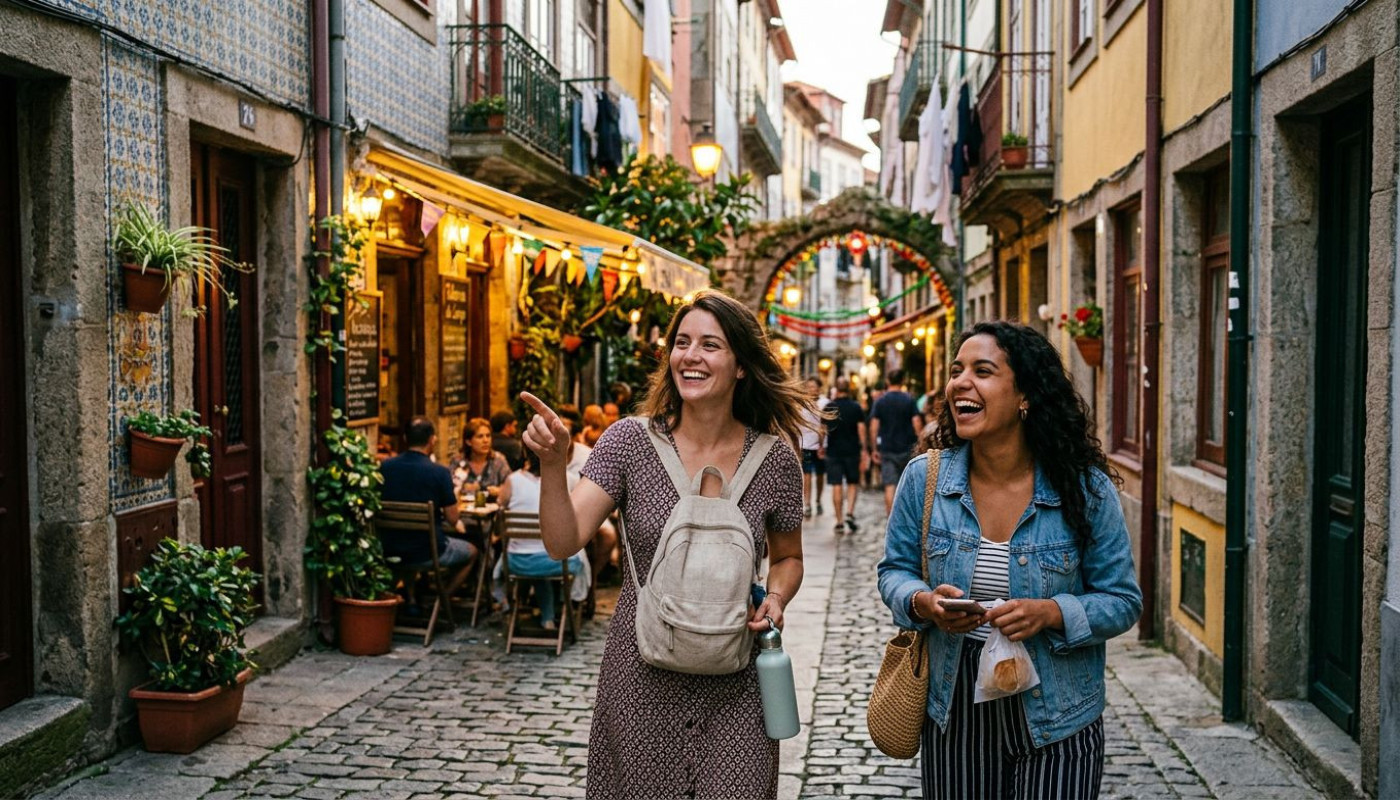
Here is the trick: the best spontaneous detours are not random, they are lightly engineered. You choose constraints that push you into discovery, then you let the street do the rest. One reliable method is the “one-neighborhood rule,” where you pick a district you know little about and commit to staying within it for two hours, no landmark hunting, no backtracking, just moving at walking speed and following whatever feels interesting, a shopfront, a staircase, a park path, the sound of music.
Another method is to travel by sensory cues rather than by icons. Follow the smell of grilling food, the sound of a market, the glow of a busy terrace, and you will often land in places built for locals. Cities are not museums, they are systems of routine, and routine leaves signals: where people queue, where they pause, where they gather after work. A detour that tracks those signals usually leads to better meals and more memorable scenes than a detour guided by a “Top 10” list.
Budget travelers can use detours as a financial strategy, not just a mood. The closer you orbit the most famous sight, the higher the prices tend to climb, and the less likely you are to stumble into genuinely good value. Walk ten minutes away, and menus change, coffee drops a euro, and you are more likely to find a small place that survives on repeat customers, not on tourist churn. The detour, in other words, can be a tool for cost control in a travel economy where city breaks have become more expensive, particularly for accommodation.
Finally, treat the detour as a story device. If you want a trip to feel unforgettable, aim for one “signature” moment per day, something that breaks the script, a sunset view you did not plan, a conversation you could not have scheduled, a spontaneous decision to take the long way back along the river. You are not trying to optimize a city like a spreadsheet; you are trying to build a memory, and memories love contrast, surprise, and a little friction.
Practical ways to keep it effortless
Make spontaneity cheap to execute. Start early, when streets are calmer and your energy is high, then keep one fixed point on the calendar so you never feel unmoored. Carry a small power bank, download offline maps, and save a few “fallback” options, a café, a park, a museum with walk-in capacity, so that a detour never turns into a panic search.
To protect your budget, decide in advance what you are willing to splurge on, and what you refuse to pay for. Many travelers overspend not on the big item they chose, but on the little purchases made under time pressure, the overpriced snack near the attraction, the last-minute taxi because they left no buffer. Detours create buffer by default, and that alone can lower the final bill.
If you are traveling in peak season, book only what truly sells out, then let the rest of the day float. Some cities also offer local cards or transit passes that can make ad-hoc movement cheaper; check eligibility for any youth, student, or regional discounts, and look for free walking tours or municipal museum days. The unforgettable moment is rarely the most expensive one, and the detour, when you give it just enough structure, is often the most reliable way to find it.
A weekend that leaves room for luck
Reserve one anchor activity, keep your budget lines clear, and use transit passes or local discounts where they exist. Then leave real gaps in the schedule, because gaps are where detours fit. The most practical travel hack is not a hidden viewpoint, it is time, and time is what lets a city turn an ordinary wrong turn into a memory.
Similar articles